
As someone who has lived in both city and country environments, I tend to prefer the latter. Rural life is not as congested, and there are fewer stupid people doing stupid things. Plus, the town actually goes to sleep at night.
Well, most of it. I’m still awake right now at 5 am, editing this blog post.
Additionally, rural life is usually cheaper, not just for renting or purchasing a home, but also in the taxes you pay. Case in point: when we moved from a city to the country, our auto taxes dropped significantly, even though we were in the same county.
Sure, we don’t have access to a Kinko’s, as Kamala pointed out, but with my high-speed fiber internet line and all‑in‑one printer‑copier‑fax machine, I don’t really need it.
I’m not even sure if Kinkos is in business anymore. I haven’t needed one in decades.
That said, living in a rural area isn’t for everyone, especially people used to living in a city. There are a few things you should consider when thinking about moving to the country.
You’ll still hear gunshots, but not for the same reason

We all know that certain cities have a reputation for gun violence. Chicago, for example, is so bad that websites like the Chicago Sun-Times track and display every shooting as they happen. When you hear gunshots in a city, people panic, and it’s easy to see why.
But when you hear gunshots in a rural country area, it’s just Thursday.
If you decide to move to a rural area, be very aware that people enjoy shooting guns in their backyard. Target practice and sport shooting can be a lot of fun, and my whole neighborhood will participate in what I like to call the Firearm Symphony. If one person goes outside to practice, it usually prompts someone else to do the same. Then another, and sometimes another.
Nobody around here cares, and no one is being killed.
When houses in our area are available to buy, I go outside and shoot more often, usually when people are checking out the homes. Why? Because you need to understand the area where you live. My chickens scream their heads off constantly, so if you look at a house in our neighborhood and decide you can’t deal with that, you know not to move here.
The same is true for gunfire.
If you hear me shooting in my backyard and decide that’s not your cup of tea, then great. I’ve just saved you from spending hundreds of thousands of dollars and making a 30-year mistake.
And backyard shooting around here isn’t just common, it’s encouraged.
I spoke to a sheriff about the frequent target shooting in the area. She told me that not only is it totally fine, but it’s also what they want people to do (practice shooting). The more practice you have, the better at firearm handling you will be. As long as you’re doing so safely, they don’t care.
I imagine it’s also a pretty good deterrent to crime when weekends make it clear that the whole neighborhood could invade a small country if it wanted to.
That said, people aren’t constantly shooting. A 20-round box of 5.56 for an AR-15 is going to cost you $12 or more, so the cost to practice can climb up fast, especially if you’re practicing with friends or family.
Besides the cost, we also do other things. Cooking out, property maintenance, lots of lawn care (especially those of us with several acres), or just sitting around watching TV.
But nice weather is a good time to practice. So is hunting season. Plus, New Year’s Eve, the 4th of July, and other notable occasions can spark quite a few celebrations with various small arms and long guns.
When the power goes out, so does everything else
I’ve read news stories and social media posts about people in cities losing their marbles when the power is out for a day. They can’t charge a phone or watch TV, and that means it’s time to riot and burn down a Dunkin’ Donuts.
When you live in a rural area, a power outage tends to take away more than your lights and internet. You also lose access to water. That’s because country life means using a well.
I don’t mean the kind where you have a bucket attached to a rope, and if you don’t fetch a pail fast to water the mule, Pa’ll get the switch.
I mean the kind where a motor siphons water out of a covered hole in your yard, through a hose and a pipe punched 100 feet deep in the ground. No power means that the motor can’t run, so your sink, tub, and toilet are on vacation.
Yeah, I said your toilet.
Imagine flushing, and nothing happens. It’s not fun, I can tell you that. Sure, the toilet tank has a few gallons, and so does the storage tank under your house. But that’s it. Once that water is gone, that 3-bean burrito that just ran through you will be hanging around in your bathroom until the power comes back.
In cases like that, you do have options. We keep a lot of water stored outside in closed Rubbermaid trash cans for those types of situations. You can’t drink it, but you can bring a bucket or two inside to flush away that Taco Bell nightmare before it starts peeling the paint from your walls.
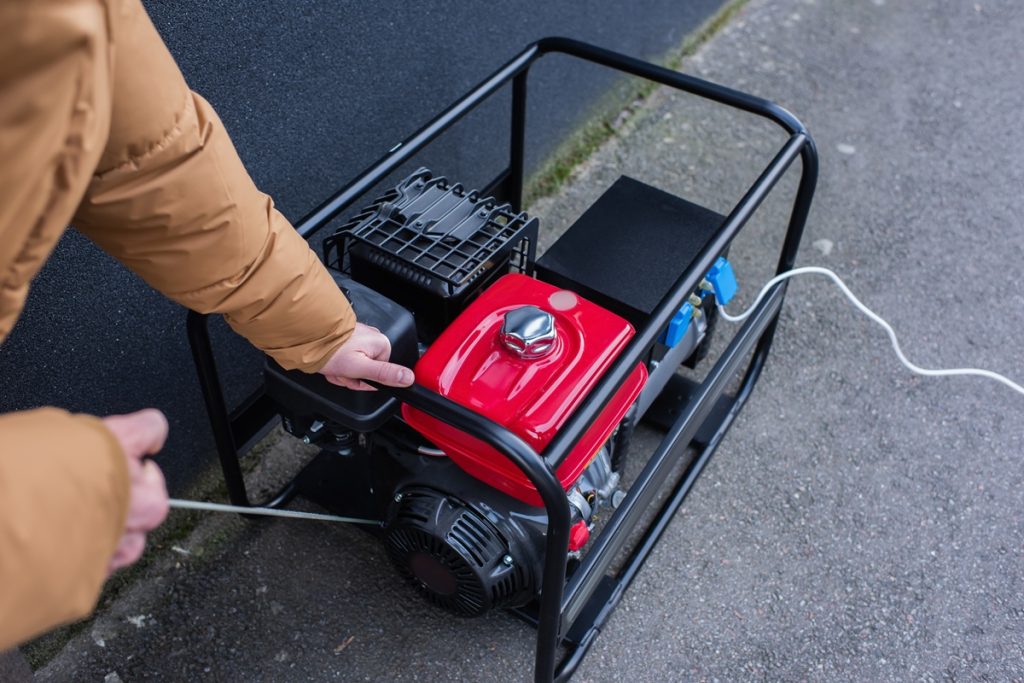
Generators are also good to have, and you can often get one strong enough to power most of your house for under a grand. I’m not talking about a Generac that’s already hooked up to your house and ready to roll once the power goes out. I’m thinking more along the lines of the Harbor Freight Predator generators. One of those will easily power important things like your TV, modem, and computer.
Probably also your refrigerator.
No, really, that one powered our fridge, freezers, modem, TV, laptops, and several lights without any trouble one Christmas. It’s definitely helpful to have.
You can also go solar, and there are thousands of solar salesmen out there in the area just waiting to sell you a system.
Yes, everything is farther away. That’s the whole point.
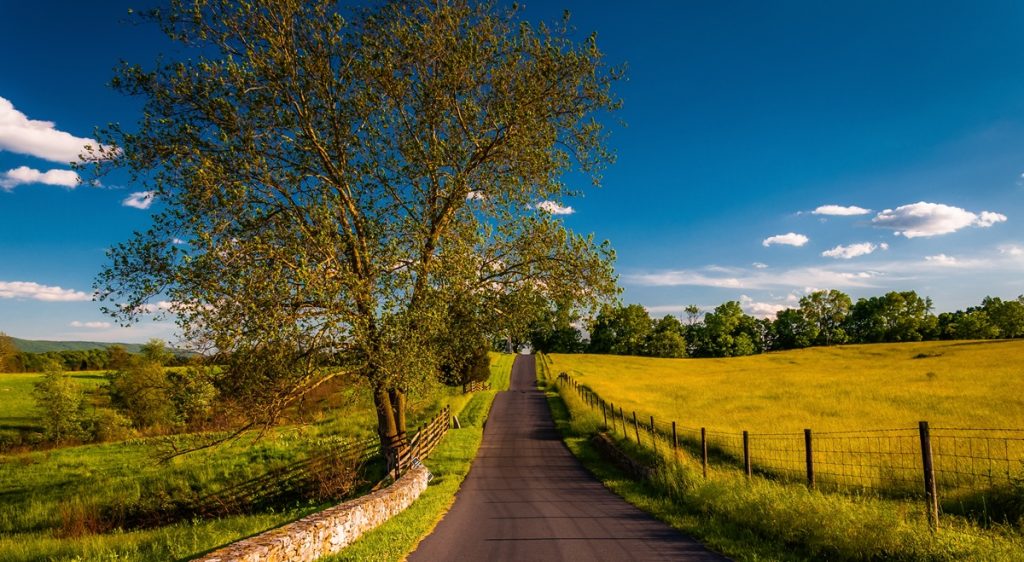
There seems to be a big push to create jobs and opportunities in rural areas by bringing in large manufacturing plants and other major businesses. Many politicians and county leaders believe they need to turn rural areas into cities because that’s what they say people want.
It isn’t. We never wanted that.
Why else do you think we moved away from all of that in the first place?
One of the most common complaints I’ve heard from people who don’t like living in the country is that nothing is close by. You have to drive farther to reach chain restaurants or any of the big-box retailers.
This is true. And so what?
Do you need these places to be right outside your front door?
Must you live in a Walmart like Natalie Portman?
No?
Then why do you require these places to be within walking distance 24 hours a day?
The closer businesses are, the less country life you have. And that means you lose any reason for living in a rural environment to begin with. You might as well move back to whatever city you came from, since you will have effectively undone the whole point of being in a rural area.
Living in nature means living with nature
Obviously, living in a rural area means animals will be around. I don’t just mean stray cats and dogs, but other things too. Possums, foxes, deer, snakes, raccoons, and coyotes all live in your general vicinity. Depending on the size of your land, they might all live on your property with you.
The first time I saw a coyote, I didn’t realize what it was. I thought to myself, “That’s the ugliest dog I’ve ever seen.”
The first time I saw a raccoon, it was walking away, and I couldn’t figure out how a cat got so big.
I don’t recommend trying to pet either one of them. This is not a Disney film. And if you have outdoor animals or animals that frequently go outside, keep in mind that wild mother nature does not play well with tamed mother nature.
If you have seasonal allergies, you should be aware that rural areas produce pollen in unrealistic quantities. Pine gets so bad that you can see clouds of it in the air, and your car will look like it was hit with a greenish-yellow powder bomb. So, make sure to buy some Zyrtec.
Or, buy all the Zyrtec.
And face masks for all the pollen that blows around when you’re cutting your grass.
Also, plan on dying at least once a year.
Living in a rural area means your sinus cavity will hate you for a few weeks every year. As I write this, I’m going through that now. I get a pollen report daily from Pollen.com to let me know what kinds of pollen are out there. It can be helpful if you know which pollens you are allergic to.
The sewer is in your yard
When you live in the city and flush a toilet or run water down a drain, the waste goes out to a main sewer line under the road. From there, it travels down a big pipe until it floods the Ninja Turtles’ living room far away.
When you live in a rural area, it goes to your front yard and sits in an underground tank, creating the world’s worst smoothie. When it fills up, it spills out beneath the surface of your yard to disperse in what’s called the drain field.
You might be thinking to yourself, “Okay, so what? It’s not in my house, so why do I need to know this?”
You need to be aware of this for multiple reasons.
- You should definitely not ever park or build on top of the septic tank or the drain field. It’s literally a void under the surface of your yard. Putting something heavy on top of it, like a car or a building structure, can and likely will damage the system or even cause it to cave in.
- Sometimes, things go wrong, and it needs to be dug up. Knowing where it is can help the guys with the worst job in the world deal with your crappy situation.
- You don’t want to plant any kind of edible food, like a vegetable garden, near it. Not unless you plan on eating a mixture of everything you’ve been flushing.
You also need to understand that a septic system is not like a sewer. There are some things you can’t flush into a septic tank, unless you want to ruin it.
Your septic system uses bacteria to break down what you flush into it. Anything you flush that can’t be broken down or is harmful to the bacteria inside is going to screw up your system. Then you get to pay to have it fixed, as it backs up into your house. Yay!
Also, every few years, you need to have it pumped out. This isn’t something you can do yourself, nor is it something you’d want to.
But for several hundred dollars, a guy with a tanker truck will come to your house, dig up the door to your vault of grossness, and vacuum out the contents.
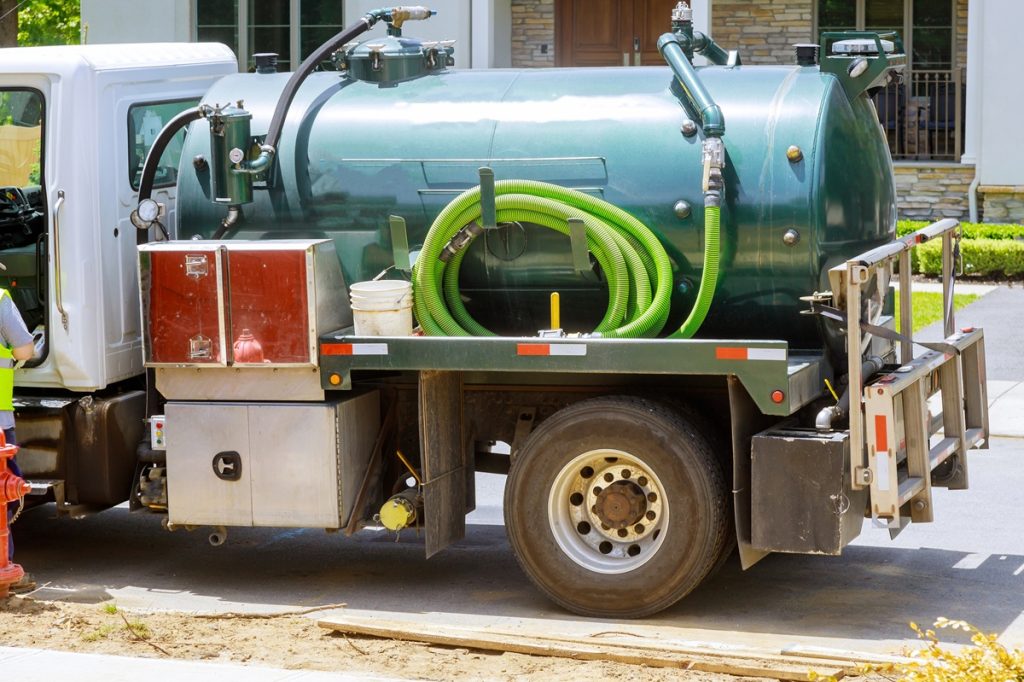
It’s important to have your septic system pumped out every few years because it helps preserve the system’s integrity. It may not be cheap, but it saves a lot of trouble down the road if you don’t.
We recently had ours pumped. Unfortunately, we didn’t know where it was. We had a general idea, and the septic guy found it, but only after literally poking holes around our yard until he hit the septic tank casing.
Ironically, we later discovered a marker in our yard that lined up with the tank.
Once he found it, he dug a couple of large holes in our yard to reach the doors of the tank so he could suck out all the remnants of too many trips to Taco Bell. After that, the holes were buried, and our yard now has a patch of ground with no grass.
Still, it’s better than the alternative.
It smells like a farm because you’re surrounded by them
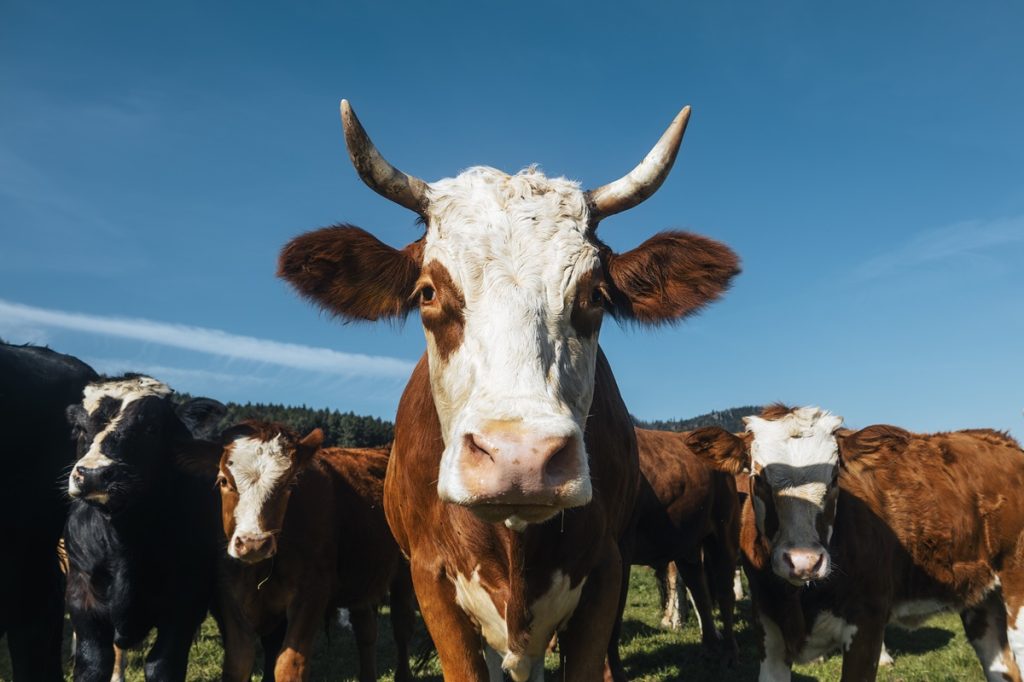
This is one of those things that shouldn’t have to be said, but for some reason does. The reason it smells like a petting zoo outside sometimes is that you live in a rural area full of farms. During planting season, farmers are fertilizing their fields and getting ready to grow all the food you eat. Depending on the size of the farm and the distance from you, it’s possible that you might get a whiff of something that smells a bit…unpleasant.
There is a large field a couple of miles from us. When the farmers who own it are getting it ready, we know. The smell of manure travels, and for a day or two, it lingers in the air. It’s not as bad as it sounds, fortunately, but I wouldn’t recommend turning it into a cologne.
Should you move to the country?
Whether you should move to the country is up to you. If you plan on embracing the actual rural life, and you can handle things like gun shots and cow farts, go for it. It certainly has advantages over city life.
Do we have quick access to the police when needed? Not always, but some cities are the same way. The difference, however, is that in the country, it’s very clear that we believe in the Second Amendment, so criminals tend to avoid us.
And sure, McDonald’s and Wendy’s aren’t within walking distance unless you’re Forrest Gump, but that doesn’t matter. We don’t live in a fast-food restaurant. We live at home, so if I have to drive 10 miles away to get a Big Mac, that’s totally fine. If I don’t feel like driving that far, that means I’ll be forced to do that thing so many are afraid of: cooking for myself.
I realize that sort of sounds like I’m a terrible cook and thus people are afraid when I do, but that’s not what I meant.
The point is, if you want to live in a rural area, fine, no problem. But don’t try to change it. You moved there for a reason, and if you start changing things, it will be just like the place you fled from.
You might as well stay in the city you left.
